
How to design a rooftop vs. ground-mounted solar off grid system?
Renewable energy will account for over 30% of global electricity generation, with solar power leading the charge. Among its many configurations, solar off grid system are increasingly attractive for users in remote areas or those with unstable grid power. However, a key decision often determines the overall performance, efficiency, and long-term cost-effectiveness of an off-grid solar system: whether to install it on a rooftop or on the ground. Each configuration presents unique design principles, challenges, and advantages. By understanding both options, you can make an informed decision to ensure maximum energy yield, long-term durability, and seamless operation of your off-grid solar system.
Key Design Principles of Solar Off Grid Systems
Designing a solar off grid system requires a comprehensive understanding of electrical engineering, solar energy conversion, and environmental factors. Unlike grid-connected systems, which rely on the utility grid for power balancing, off-grid systems operate independently, meaning they must autonomously generate, store, and distribute energy.
The core components of a solar off grid system include: solar panels to generate electricity, battery storage systems to store energy, charge controllers to regulate energy flow and prevent overcharging, and inverters to convert DC power into usable AC power.
The first step in system design is to assess energy consumption patterns. For example, a residential system may require between 5 kWh and 20 kWh of electricity per day, depending on usage and location. Accurate load assessment ensures that the battery bank and solar array are appropriately sized to meet daily energy needs while retaining backup power for cloudy days. The mounting location, whether rooftop or ground-mounted, also directly impacts overall performance. Factors such as shading, tilt angle, orientation, and airflow around the panels all affect power generation and temperature regulation.
Designing a Rooftop-Mounted solar off grid system: Combining Efficiency and Space Utilization
Rooftop installations are often preferred for residential and urban applications due to their compact design and efficient space utilization. If properly designed, rooftop off grid solar systems can achieve high efficiency while minimizing installation complexity.
The most critical aspect of rooftop design is load-bearing analysis. The roof structure must be able to support the weight of the solar panels, mounting rails, and environmental loads such as wind and snow. Engineers often use lightweight aluminum mounting systems to minimize structural stress.
Another critical parameter is panel orientation. In the Northern Hemisphere, for optimal sunlight, panels should face south at an angle equal to the site’s latitude. For example, solar systems in Texas typically utilize a 30-35° tilt angle to maximize solar energy absorption. Furthermore, rooftop systems normally have shorter wiring between the inverter and the battery, reducing energy losses. This makes rooftop off grid solar systems a compact and efficient energy solution.
Ground-mounted solar off grid systems: Flexibility and Scalability
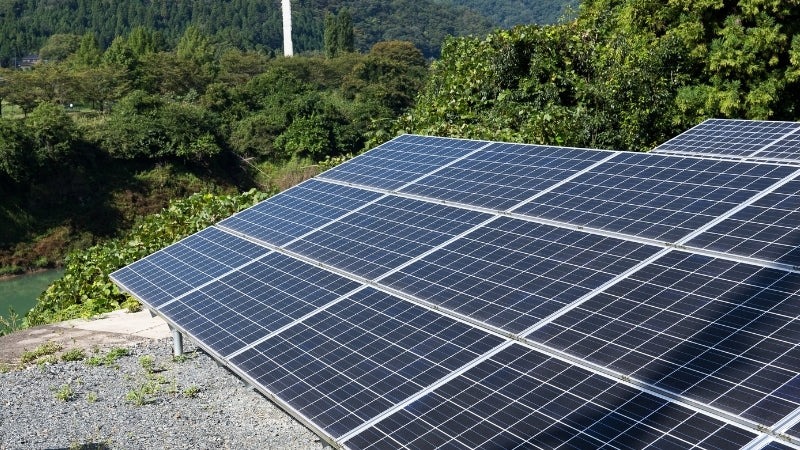
Ground-mounted off grid solar systems offer flexible design and scalability, making them suitable for large installations such as farms, industrial facilities, or rural communities. These off-grid solar systems can optimize performance regardless of rooftop space or orientation.
Ground-mounted systems can have either fixed-tilt or tracking foundations. Fixed-tilt systems are cost-effective and straightforward, while single- or dual-axis trackers can increase energy production by 15% to 30% by following the sun throughout the day. At the same time, engineers must conduct soil stability tests and design mounting structures that are wind- and erosion-resistant. In areas prone to flooding, elevated racking can ensure the longevity of the system. A significant advantage of ground-mounted solar installations is ease of maintenance. Technicians can easily clean panels, check connections, and replace components without having to climb onto the roof. This convenience translates to lower maintenance costs and a longer lifespan for off grid solar system.
Comparing Rooftop and Ground-mounted Off Grid Solar Systems
Understanding the trade-offs is crucial when choosing between rooftop and ground-mounted off grid solar systems.
| Factor | Rooftop Solar Off Grid System | Ground-Mounted Solar Off Grid System |
| Space Requirement | Utilizes existing structure | Requires dedicated land |
| Installation Cost | Lower labor and materials | Higher due to ground preparation |
| Energy Efficiency | May be limited by roof angle | Fully optimized for sunlight |
| Cooling Performance | Limited airflow | Better natural ventilation |
| Maintenance | Harder to access | Easier to maintain |
| Scalability | Limited by roof area | Easily expandable |
Industry analysis shows that ground-mounted systems can generate 10-15% more energy annually than rooftop installations, primarily due to their superior orientation and airflow. However, rooftop installations still offer advantages for space-constrained environments and urban users. In practice, the decision often hinges on budget, land availability, and energy requirements. A well-designed off-grid solar system, regardless of installation type, should ensure optimal solar exposure, minimized losses, and high operational reliability.
Improving Off-Grid Solar System Performance and Reliability
Maximizing the performance of off grid solar systems, whether rooftop or ground-mounted, requires engineering precision and advanced control strategies. Battery management is a key factor in optimization. Efficient charge and discharge cycles extend battery life and ensure a reliable power supply even during periods of low sunlight. Modern systems employ intelligent charge controllers with MPPT, which can improve energy harvesting efficiency by up to 25% compared to traditional PWM controllers.
Thermal management is also crucial. For every 1°C increase in temperature, photovoltaic efficiency decreases by 0.4% to 0.5%. Integrated temperature sensors and automatic load control mechanisms help maintain optimal performance levels. For data-driven users, off-grid solar systems incorporate IoT-based monitoring platforms that enable remote tracking of power generation, battery health, and load consumption. These features not only improve reliability but also support predictive maintenance, identifying performance degradation before it becomes costly.
Building Reliable Energy with Off-Grid Systems
Designing an off grid solar system, whether rooftop or ground-mounted, is more than just an engineering task; it’s a long-term investment in energy independence and environmental responsibility. Each design has its advantages, but success ultimately depends on the right system size, wise component selection, and professional installation. As a leading manufacturer of off-grid solar systems, we ensure optimal performance and long-term durability, thanks to our dedicated engineering team, whether you’re powering a home, a business, or an entire community.