
Biography of Guus Hiddink: The Magician of World Football
The following is a summary of information from Xoilac TV https://www.chicagocomedyfilmfestival.com/ about Biography of Guus Hiddink unveils the extraordinary life of a man who traveled the globe to teach the art of winning, transforming underdogs into titans and restoring pride to fallen giants. From his humble beginnings in the Dutch countryside to becoming a national deity in South Korea and a beloved figure at Stamford Bridge, Hiddink’s career is a masterclass in leadership and tactical adaptability. This article explores the defining moments that turned a solid midfielder into one of the most celebrated managers in history.
Biography of Guus Hiddink: The Magician of World Football
Early Life and Transition to Coaching in the Biography of Guus Hiddink
Born on November 8, 1946, in the small town of Varsseveld, Guus Hiddink grew up with a deep love for the game. His playing career, while respectable, did not necessarily forecast the global fame he would later achieve. He spent most of his time as a midfielder for De Graafschap, with spells at PSV Eindhoven and a brief adventure in the United States. He was known as a player with great vision, a trait that would become the foundation of his managerial philosophy.
Retiring in 1982, Hiddink wasted no time moving into coaching. He served an apprenticeship that allowed him to understand the nuances of man-management. Unlike many rigid tacticians of his era, Hiddink focused heavily on the psychological aspect of the sport, believing that a happy and confident player performs better than a restricted one. This human-centric approach would become the signature of his future successes.
The PSV Eindhoven Era: Conquering Europe
The first major chapter in the Biography of Guus Hiddink was written at PSV Eindhoven. Taking charge in 1987, he inherited a talented squad but instilled a winning mentality that was previously missing. The 1987-1988 season remains the pinnacle of Dutch club football history.
Under his guidance, PSV achieved the legendary Treble, winning the Eredivisie, the KNVB Cup, and the European Cup. In the final against Benfica, Hiddink’s tactical discipline shone through as PSV won on penalties. This victory proved that he could blend the traditional Dutch flair with a pragmatic, steely defense. It launched him into the stratosphere of elite coaching, proving he could compete with the very best in Europe.
Read more on Xoilac TV https://www.chicagocomedyfilmfestival.com/lich-thi-dau/
The Miracle Worker: South Korea and Australia
Hiddink’s true genius, however, was often found in his international exploits. He earned a reputation as a specialist in punching above his weight, taking national teams with limited expectations and turning them into world-beaters.
The Historic 2002 World Cup Run
The most emotional segment of the Biography of Guus Hiddink belongs to the 2002 World Cup. Appointed to lead co-hosts South Korea, Hiddink faced skepticism as the team had never won a single World Cup match in previous tournaments. Through grueling training camps and a demand for total fitness, he forged a team of relentless energy.
The “Taegeuk Warriors” stunned the world by defeating Portugal, Italy, and Spain on their way to the semi-finals. Hiddink became an instant icon in South Korea, earning honorary citizenship and a status reserved for national heroes. His success in 2002 demonstrated his unique ability to bridge cultural gaps and unite a squad toward a singular, impossible goal.
The Socceroos’ Golden Generation
Following his Asian success, Hiddink took on the challenge of Australia. He guided the Socceroos to the 2006 World Cup, breaking a 32-year drought for the nation. In Germany, his tactical flexibility allowed Australia to navigate a tough group and reach the Round of 16.
Although they were eliminated by eventual champions Italy in a heartbreaking stoppage-time loss, Hiddink had changed the mentality of Australian football forever. He proved that his methods were universal, working just as effectively in Oceania as they did in Europe and Asia.
Chelsea FC and the Role of the Savior
Hiddink’s relationship with club football continued to flourish, particularly with Chelsea FC in the Premier League. He never took the permanent job, yet he is regarded as one of the club’s most successful managers.
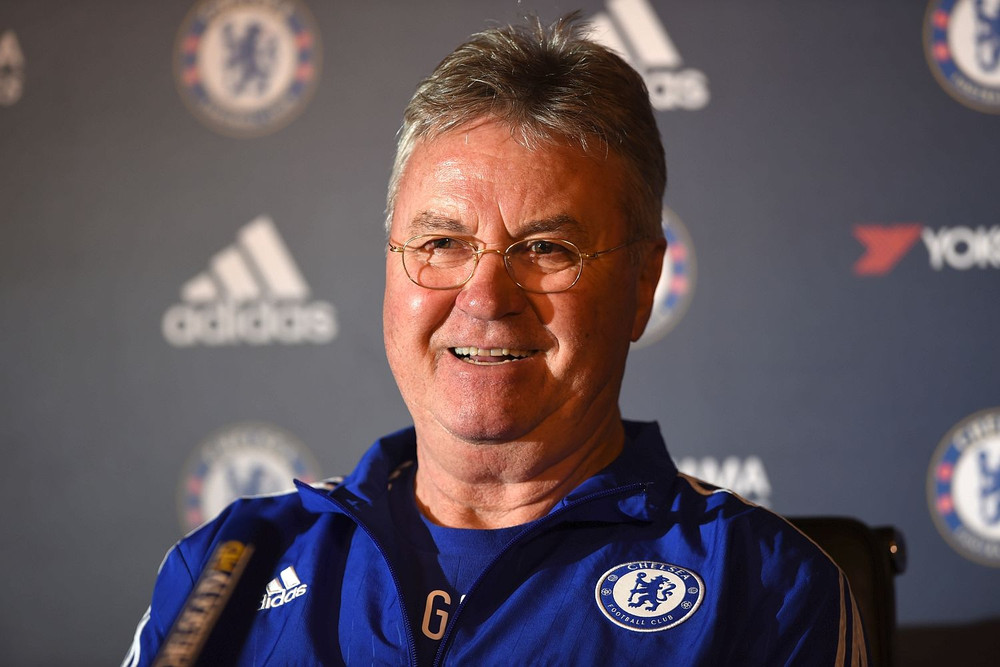
In 2009, he arrived at Stamford Bridge as an interim manager to rescue a faltering season. Hiddink immediately unified the dressing room, losing only one league match and guiding the Blues to an FA Cup triumph. His calm authority and tactical acumen endeared him to players like Frank Lampard and John Terry. He returned in 2015 for another rescue mission, stabilizing the club once again. These stints cemented his legacy as the ultimate “super-sub” manager who could fix any crisis.
Legacy and Conclusion
Guus Hiddink officially retired from management in 2021, leaving behind a legacy that spans continents and generations. He was a pragmatist who loved beautiful football, a strict disciplinarian who was loved like a father by his players. His career teaches us that with the right belief and preparation, the underdog can always have their day in the sun.
The Biography of Guus Hiddink is a story of global connection through sport. From the training grounds of PSV to the packed stadiums of Seoul and London, his influence remains palpable. For fans who are inspired by Hiddink’s journey and wish to stay updated with the latest football news, match schedules, or delve deeper into the data of the teams he once managed, Xoilac is an excellent resource to explore. You can refer to this channel to keep your passion for the beautiful game alive and well-informed.
