
The reason why people get involved in random processes
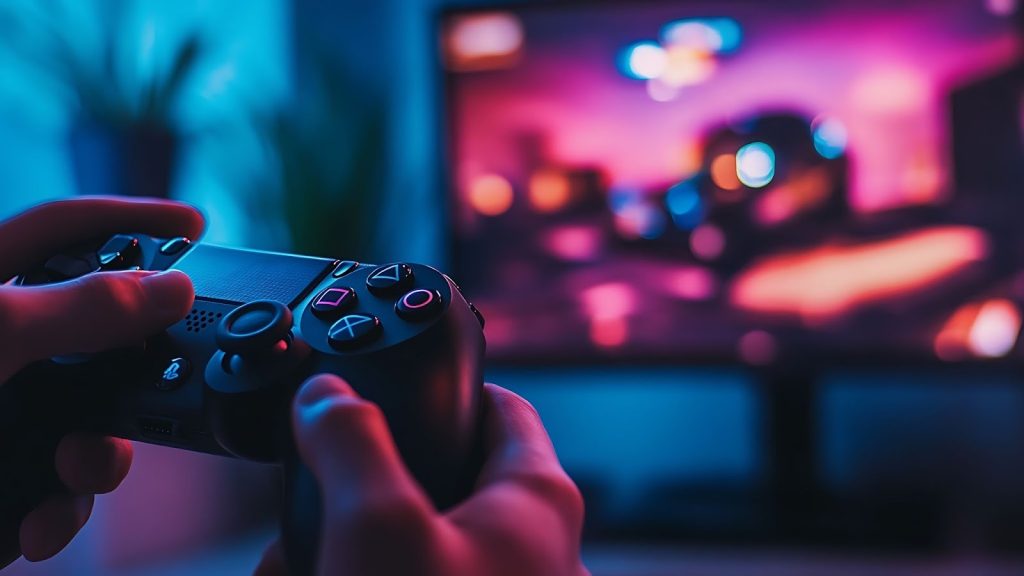
Consider the spinning of a roulette wheel or the anticipation of a game displayed on a computer screen, showing a reward. The hope that time will be different, that skip, that anticipation is common to anyone who has encountered chance, at a casino or even in the virtual world. But what is it that makes people pour so much emotional energy into processes that are, by definition, random? The solution lies at the convergence of psychology, neuroscience, and digital behavioral design.
The Psychology of Uncertainty.
Human beings are pattern-seeking animals. Our brains are always seeking meaning, even in entirely random events. It is this mental tendency that makes it seem like a win when players nearly win a game or a slot. It is not a superstition; it is a behavior rooted in evolution, supported by contemporary technology.
- Decision fatigue: When results are unpredictable, the brain is constantly appraising opportunities, which may raise the cost of emotion.
- Dopamine loop: Even small rewards, or the potential for rewards, stimulate dopamine, creating a feedback loop that prompts a person to re-engage.
- Variable rewards: The uncertainty of the results, particularly a win, and at other times nothing, keeps the mind active, similar to opening a notification on your phone.
Betamo Casino reflects all real money gambling with various betting, online casinos with easy money withdrawn systems for online gamblers all over world.
Patterns in Randomness
Human beings are inclined to interpret a structure that does not exist. This is the classic gambler’s fallacy, which can lead one to feel a win is coming after a streak of negative performance. On the same note, the hot-hand illusion makes individuals believe that prolonged streaks in random occurrences do not happen by chance. These are not mere idiosyncrasies of ours, but they are the way our brains are trying to arrange chaos in order.
Table 1: The Influence of Perception on Random Engagement.
| Random Event | Actual Outcome | Perceived Pattern |
| Spin of a roulette wheel | Loss | “I’m due for a win soon” |
| Card draw in a game | No special hand | “I’m on a streak, luck is coming” |
| Digital loot box | Common item | “Almost got the rare one!” |
This table demonstrates how the mind constructs stories around randomness, which serve as sources of anticipation and emotional commitment in cases where there is no cause-and-effect relationship.
Random Engagement: The Neuroscience of it.
Uncertainty can be really pleasurable at a neurological level. When results are unpredictable, the brain’s reward circuitry is activated.
- Dopamine spikes: Waiting to receive a possible reward triggers dopamine release, making the waiting process enjoyable.
- Intermittent reinforcement: Behavioral psychology has demonstrated that variable rewards, occasional wins, sometimes none, will be more effective at keeping the game interesting than predictable rewards.
- Illusion of control: In a random process, individuals often feel that their decisions do not go to waste, which reinforces their sense of control.
These processes clarify why one can troll through betting or other online experiences multiple times, as gamblers can when navigating the options on Betamo DE, even in a scenario with a neutral probability of winning. The expectation of it is a component of the reward.
A Digital Environment of Randomness.
Digital platforms have exploited these cognitive and neurological dispositions. The concepts of uncertainty, near-misses, and unpredictable rewards apply to social media feeds and gamified apps.
- Internet games and casinos, digital slot machines, or reward systems simulate the pleasurable aspect of randomness, supporting interaction with instant-gratification cycles.
- Social media notifications: Likes, comments, or shares are displayed randomly, taking advantage of the identical dopamine-related anticipation that is found in traditional games.
- Patterns of behavior: These random results cause a habit among the users, and they tend to check or interact more than they wanted to, a phenomenon that is not new to anyone who visits the digital gaming community known as Betamo Casino.
Though not directly related to gambling, these experiences make us see why we as humans are attracted to random processes; we enjoy a bit of disorder in our heads, particularly when the possibility of gaining something accompanies it.