
What do the Patterns Reveal About the Market Trends?
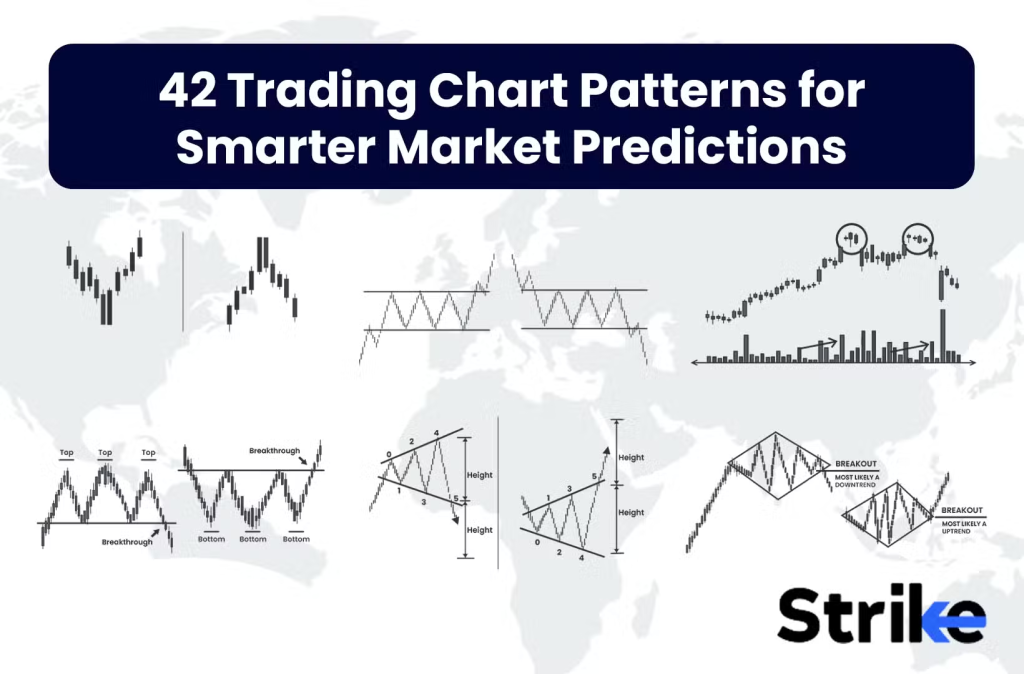
Market patterns often carry silent clues about the direction in which trends are forming. By studying these signals closely, traders can understand shifts in momentum, spot emerging opportunities, and anticipate potential changes before they fully unfold.
Patterns appear in different shapes and timelines, but what matters most is how we interpret them in the broader market context.
A careful reading of these movements can make a real difference in decision-making. In this article, we will discuss what these patterns reveal about market trends.
Types of Market Patterns
Market patterns can be understood as repeated movements or formations that give clues about where prices may head next. These patterns often reflect the collective behaviour of traders and investors over time. Broadly, they can be grouped into these main categories:
- Technical Patterns: These include shapes like head and shoulders, triangles, and double tops or bottoms. Traders often use them to predict price movements.
- Seasonal and Cyclical Patterns: Markets tend to show recurring trends during specific times of the year or phases of the economic cycle, such as year-end rallies or post-budget reactions.
- Volume Patterns: Changes in trading volume can signal growing interest or a possible shift in direction.
- Volatility Patterns: Sudden increases or decreases in volatility often indicate a change in market sentiment or upcoming major moves.
- Trend Patterns: These show whether a market is in an upward, downward, or sideways phase, helping identify the broader direction.
What These Patterns Indicate
Building on the foundation of identified patterns, it becomes essential to understand what these signals actually convey about market behaviour.
1. Bullish vs Bearish Signals
Patterns like head and shoulders or double tops often hint at bearish momentum, whereas double bottoms, rising wedges, or piercing pattern formations suggest a shift toward buying pressure.
The piercing pattern, in particular, appears during a downtrend and signals that bulls are regaining control by pushing prices above the midpoint of the prior bearish candle.
These cues help traders anticipate direction and sentiment.
2. Trend Reversals vs Trend Continuations
Reversal patterns emerge when an existing trend is weakening and a shift to the opposite direction is likely (for example, a head and shoulders after a long uptrend).
Continuation patterns appear as temporary pauses or consolidations in an ongoing trend, after which the trend resumes its course (e.g. flags or pennants).
3. Momentum and Market Sentiment Signals
Momentum and sentiment patterns give early clues about how strong a market move might be.
A breakout supported by rising trading volumes usually signals firm participation from buyers or sellers, which adds weight to the trend. When prices consolidate or form neutral shapes like doji candles, it reflects hesitation or a balanced tug of war between both sides.
Observing these cues helps traders gauge conviction and anticipate possible direction shifts.
4. Signal Strength and Reliability
When evaluating chart formations, the strength and reliability of a signal depend on how clearly the pattern develops, the accompanying volume, and supporting indicators.
Patterns that form over longer timeframes and align with broader trends often carry more weight. For example, stocks with golden crossover patterns, where the short-term moving average rises above the long-term, tend to draw stronger attention.
Combining pattern clarity with volume confirmation improves forecasting accuracy.
5. Market Sentiment & Psychology
Market sentiment and psychology reflect how traders collectively feel, whether optimistic or fearful, and they show up in patterns.
Emotions like greed and fear push more buying or selling than logic alone. For example, when nearly everyone expects prices to rise, bullish sentiment can drive prices higher until the move becomes overextended.
On the other hand, when fear spreads, even solid fundamentals may not hold prices steady.
Conclusion
Patterns offer valuable hints about how markets may move, but they are not certainties. They reveal momentum, possible turning points, and prevailing sentiment. Use them as guides, not strict rules, and always seek confirmation before making decisions.