
Inside Chad E. Foster’s Leadership Keynote On Resilience
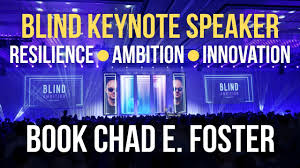
Chad E. Foster’s leadership keynote on resilience has become a standout message for organizations and leaders navigating uncertainty and disruption. Foster is a globally recognized speaker who brings not only inspiring personal stories but also practical frameworks that help individuals and teams build lasting resilience in leadership and life. His message resonates because it blends real adversity with actionable insight, showing audiences how to transform setbacks into springboards for growth.
A Journey Of Adversity And Achievement
Chad E. Foster’s own life story is the foundation of his leadership keynote on resilience. At 21 years old, Foster lost his eyesight, a life-altering event that could have derailed his ambitions. Instead, his blindness became the catalyst for extraordinary achievement. Foster went on to graduate from Harvard Business School’s executive leadership program, making history as the first blind executive to do so.
He also became a highly successful business leader, creating CRM software that industry giants said was impossible and driving financial strategies that resulted in billions of dollars in contracts. Foster’s professional accomplishments, alongside his personal pursuits such as skiing black diamond slopes and practicing Brazilian Jiu-Jitsu, illustrate the core theme of his keynote: resilience is not about overcoming singular challenges, but about thriving in the face of ongoing adversity.
Defining Resilience For Leaders
In his keynote, Foster frames resilience not simply as the ability to survive difficult circumstances, but as a strategic leadership capability. He emphasizes that resilience involves shifting mindsets, embracing discomfort, and using obstacles to fuel innovation. Rather than viewing adversity as something to avoid, Foster challenges audiences to see it as a source of growth.
Foster’s approach reframes common leadership assumptions. Instead of defining resilience as a reactive quality, he presents it as a proactive choice leaders make each day. This shift in perspective helps leaders move from a mindset of defense and caution to one of opportunity and forward motion. He teaches that resilient leaders do not just cope; they actively shape the way their teams respond to uncertainty, change, and pressure.
The Blind Ambition Framework
Central to Chad E. Foster leadership keynote is what he calls the Blind Ambition Framework. While the framework itself has multiple components, the core idea is to help leaders and teams move beyond limiting beliefs and traditional comfort zones. Foster argues that limitations become advantages when leaders learn to uncover insights hidden within adversity.
In his keynote, Foster shares how this framework helped him turn personal and professional obstacles into strategic strengths. He uses vivid storytelling and concrete examples to make the concepts accessible. His goal is always to provide methods that audiences can apply immediately, not just feel inspired by temporarily.
Stories That Resonate
One of the most powerful aspects of Foster’s keynote is his use of story. He recounts moments when he faced what seemed like insurmountable challenges, and how his mindset shaped the outcomes. These stories do more than evoke emotion. They create points of connection that help audiences see themselves in the narrative.
By sharing both personal experiences and professional lessons, Foster shows that resilience is universal. Whether a leader is managing a team through market disruption, navigating a major organizational change, or confronting personal setbacks, the principles he teaches are adaptable and relevant. His authenticity makes resilience feel possible and practical for every listener.
Practical Takeaways For Leadership
Foster’s keynote includes practical takeaways designed to help leaders implement resilience in their teams and organizations. These insights are grounded in his own experiences but are tailored to apply broadly across industries. One key message is the importance of owning outcomes. Foster teaches that leaders who take responsibility, even in failure, set a tone that empowers their teams to act with accountability and confidence.
Another theme is the power of mindset. Foster encourages leaders to shift from a victim perspective to what he calls a visionary mindset. This shift involves reframing challenges as opportunities, focusing on growth instead of limitations, and cultivating a forward-looking outlook that drives performance.
Foster also highlights the value of clear communication and shared narratives within teams. Resilience, he explains, is strengthened when teams align around a common purpose and story. This clarity helps teams navigate complexity and maintain momentum even when outcomes are uncertain.
Why His Message Matters Today
In a world characterized by rapid change, disruption, and uncertainty, leaders are increasingly called on to guide teams through challenges that have no clear precedent. Foster’s keynote on resilience speaks to this need by providing a framework that is both inspiring and actionable.
His message resonates because it blends emotional depth with practical relevance. Audiences walk away not just motivated, but equipped with tools they can use to change the way they lead, think, and respond when faced with difficulties. As organizations continue to confront new pressures and opportunities, Foster’s insights on resilience offer a roadmap for sustainable leadership and long-term success.